AI Video Production in 2027: Will Your Brand Be Ahead or Left Behind?
AI is changing the economics of commercial filmmaking. Brands that understand it early could gain a serious creative advantage.
By ANDRIX · 17 November 2026 · 8 min read
AI Video Production in 2027: Will Your Brand Be Ahead or Left Behind?
AI is changing the economics of commercial filmmaking. Brands that understand it early could gain a serious creative advantage.
Category: Studio Insights
Published by: ANDRIX Journal
Reading time: 5 minutes
Your Competitors May Already Be Rethinking Their Video Production
Imagine this.
Your competitor launches a cinematic commercial featuring extraordinary locations, spectacular visual effects and production quality that looks like it belongs in a major advertising campaign.
You assume they spent hundreds of thousands of dollars.
But what if they didn't?
What if the production was created by a small team combining traditional filmmaking knowledge with the latest AI technology?
This is no longer just a futuristic concept.
AI-assisted video production is changing what brands can create with limited resources.
And as we approach 2027, the gap between businesses experimenting with these technologies and those ignoring them could become increasingly significant.
According to the Interactive Advertising Bureau's 2026 Digital Video Ad Spend & Strategy Report, 62% of surveyed US digital video advertising buyers were already using generative AI for video creative, up from 51% in 2025.
Among buyers using generative AI, the share of video advertising assets produced or enhanced with AI is projected to reach 43% in 2027.
The question is no longer whether AI will influence advertising. It's whether your brand is preparing to take advantage of it.
1. The Cinematic Commercial You Couldn't Afford May Finally Be Within Reach
Traditionally, creating a cinematic commercial could involve large crews, expensive locations, elaborate sets, specialist equipment and extensive post-production.
For many SMEs and growing brands, ambitious creative ideas were simply too expensive to execute.
AI is beginning to change that.
Imagine launching your product in a futuristic city.
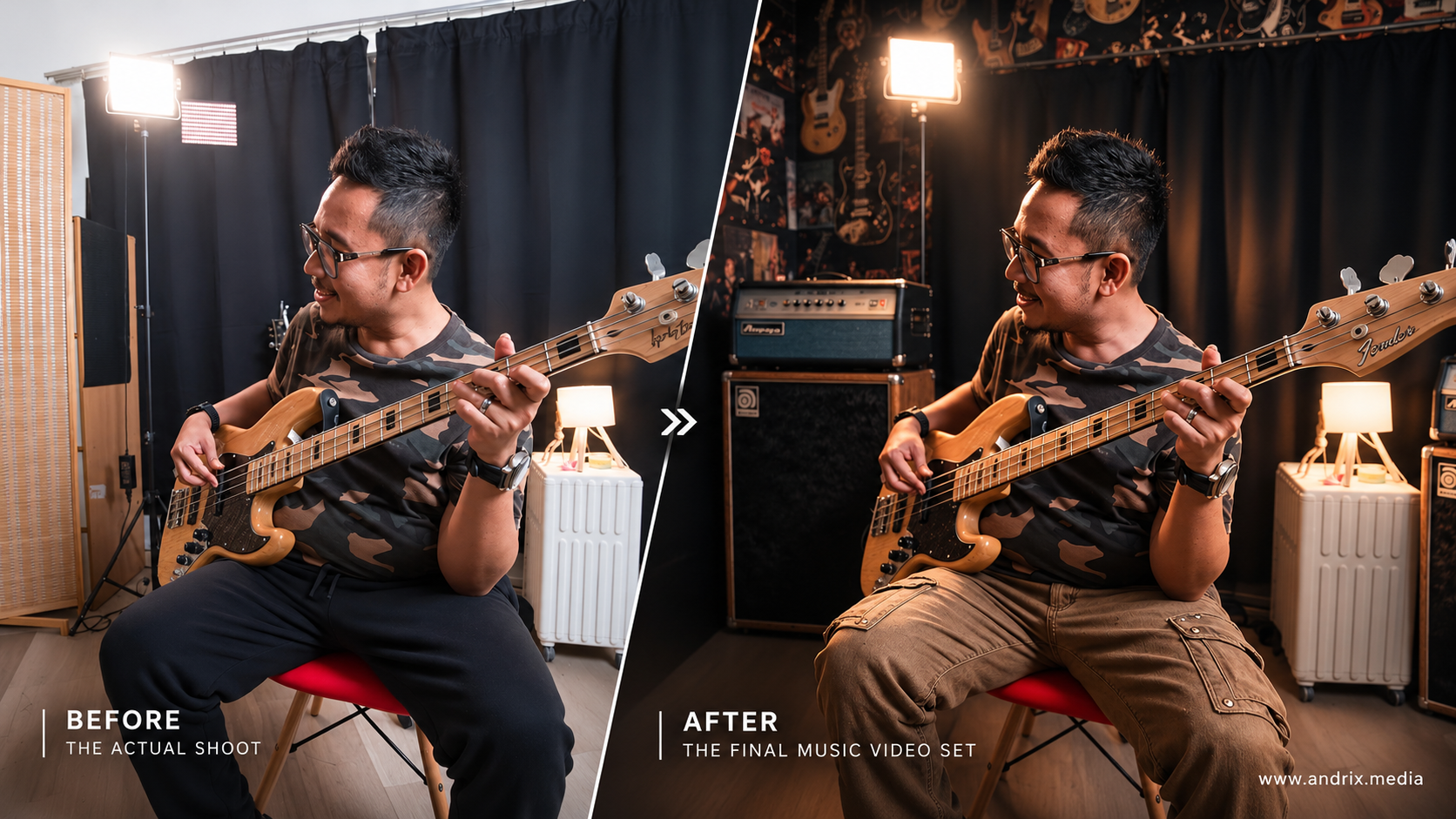
Transforming an ordinary office into a spectacular sci-fi environment.
Or creating a cinematic brand story that takes audiences across multiple worlds.
These concepts may no longer require the same physical production resources they once did.
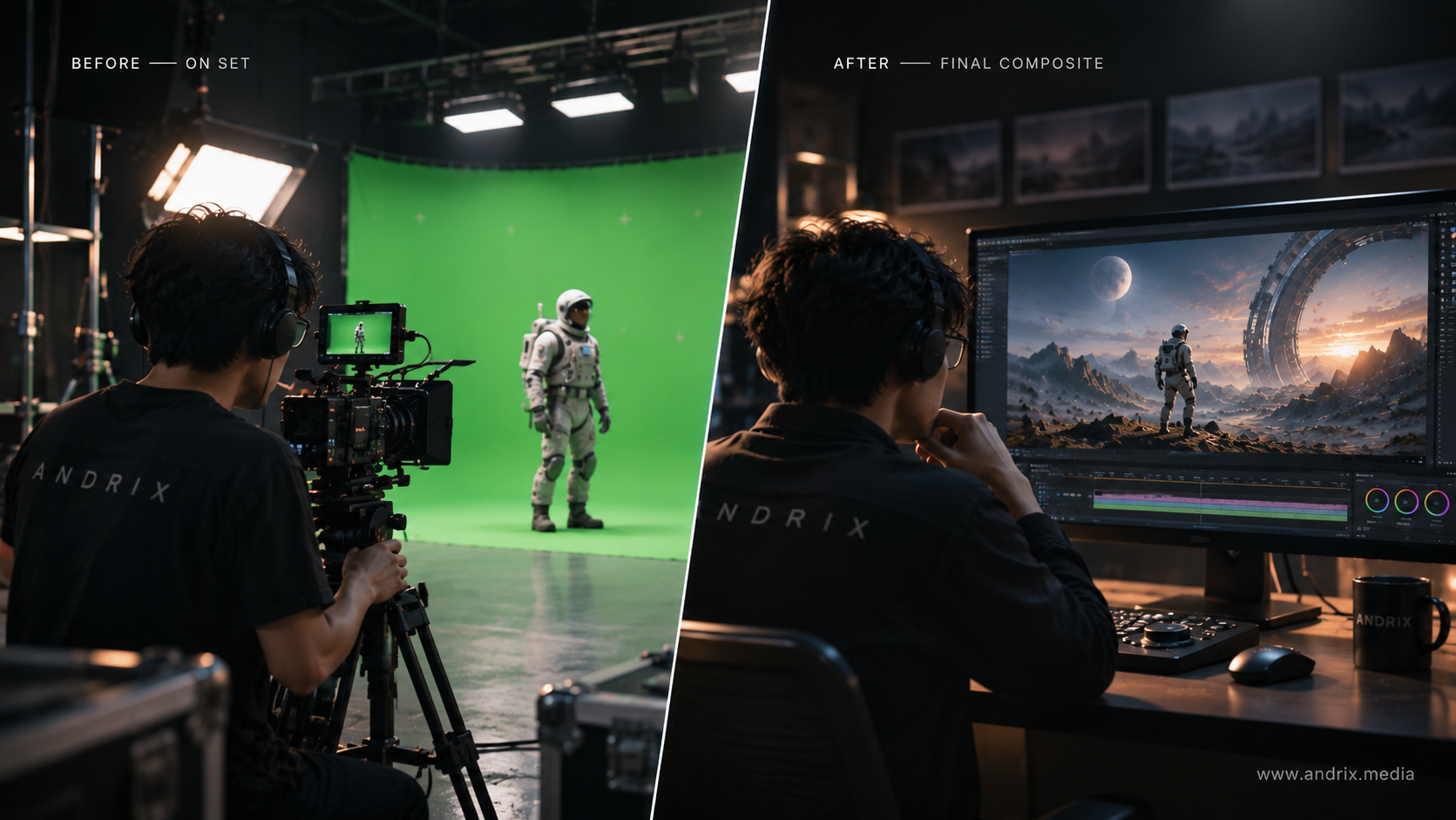
By combining live-action filming, AI-assisted environments and visual effects, smaller production teams can explore creative possibilities that previously demanded much larger budgets.
Of course, AI doesn't make every production inexpensive. Complex projects still require planning, specialist expertise and significant creative work.
But the opportunity is clear.
Your brand's imagination no longer has to be restricted by the traditional scale of your production.
2. Your Competitors Could Be Producing More Content With the Same Budget
Marketing teams are constantly under pressure to produce more content.
More campaign variations.
More social videos.
More product launches.
More advertising creatives.
And often, without a corresponding increase in budget.
AI-assisted workflows could help brands create additional versions of existing creative assets, explore alternative visual treatments and adapt content for different platforms.
For example, a campaign might begin with one cinematic master video.
From there, the production team could develop shorter social edits, different visual treatments or market-specific versions.
Not every variation will be effortless or suitable for automation.
But brands that develop effective workflows could gain greater creative flexibility from their production budgets.
Now imagine competing against a business that can test several strong video concepts while you're still struggling to produce one.
That's where the potential competitive advantage becomes interesting.
In 2027, the brands that learn to produce intelligently may be able to move faster than those that simply spend more.
3. The Biggest Risk May Be Waiting Too Long to Experiment
New technology often creates an uncomfortable situation for businesses.
Adopt too early, and you risk investing in something immature.
Wait too long, and competitors may develop capabilities and experience before you do.
AI video production is no exception.
The technology is evolving quickly, but it still has limitations.
Characters can become inconsistent.
Products may not render accurately.
Complex movements can be unpredictable.
And producing a polished commercial can require substantial iteration.
That's precisely why brands should begin learning now.
Not by replacing their entire production strategy overnight.
But by experimenting with manageable projects.
A short brand film.
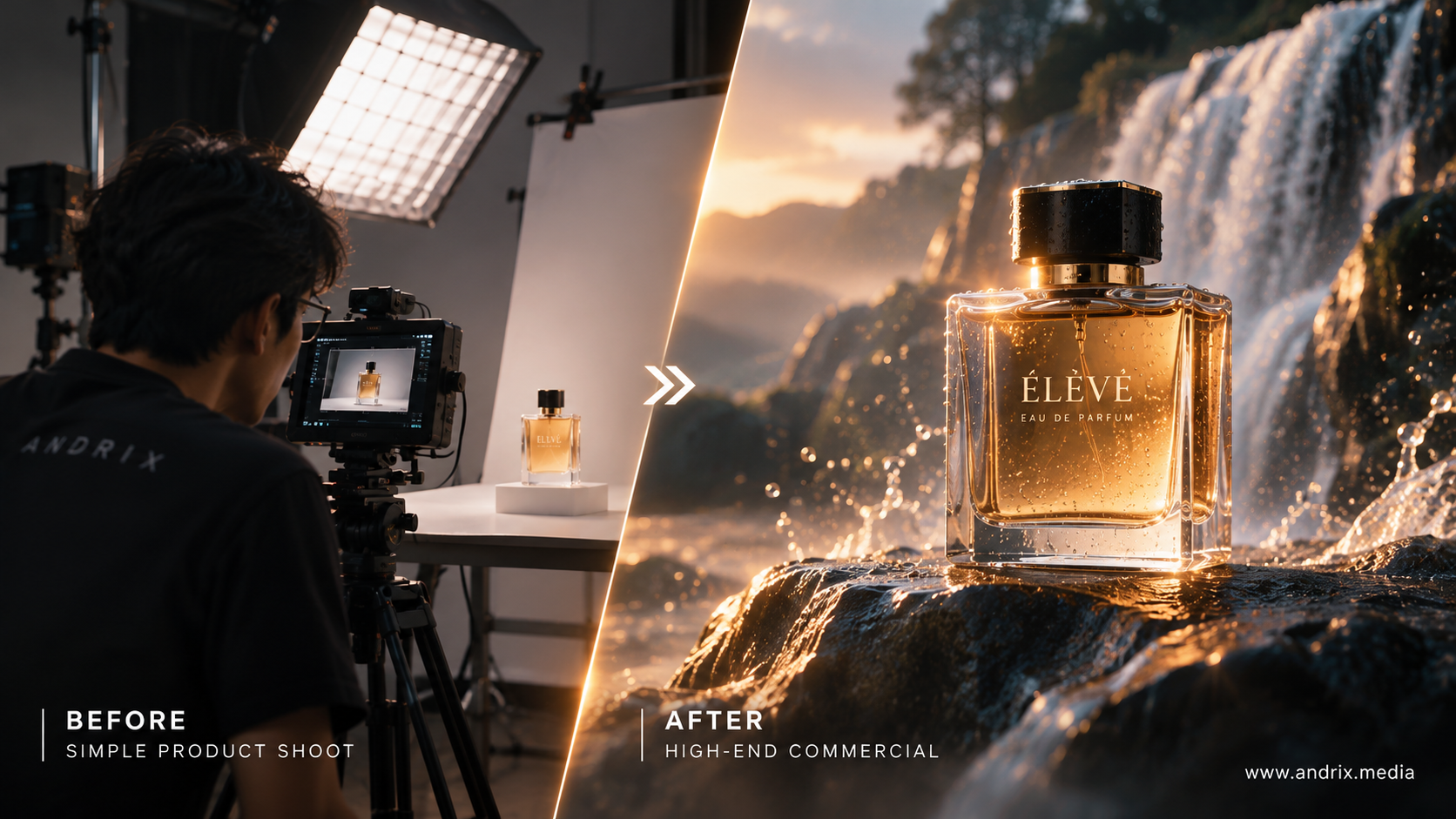
A cinematic product teaser.
A social media campaign.
Or a hybrid production combining real footage with AI-assisted visual effects.
These experiments can help marketing teams understand what works, what doesn't and where AI genuinely adds value.
By the time these workflows become more commonplace, the brands that have already experimented may be better prepared to use them effectively.
The advantage isn't simply having access to AI. It's knowing how to use it before everyone else catches up.
4. Smaller Brands Could Start Looking Like Bigger Brands
For years, production budgets have influenced how ambitious a brand's advertising could appear.
Large companies could invest in elaborate campaigns.
Smaller businesses often had to work within more limited creative possibilities.
AI-assisted filmmaking may begin to narrow that gap.
A small Singapore business could create an ambitious cinematic advertisement.
An independent product brand could explore visual storytelling that previously seemed beyond its budget.
A growing company could develop a more distinctive visual identity without committing to an enormous production.
This doesn't mean every SME can suddenly create a Hollywood-quality film for almost nothing.
Production quality still depends on creative direction, technical expertise and the resources available.
But AI can give smaller brands access to techniques and creative possibilities that were previously harder to justify commercially.
For ambitious businesses, that is worth paying attention to.
Your competitors don't necessarily need a bigger production budget to create something that looks more ambitious than your next campaign.
5. But Cheap AI Videos Could Damage Your Brand
There's another side to this opportunity.
As AI video tools become easier to access, the internet is filling with generated content.
Some of it is spectacular.
Some of it is forgettable.
And some of it looks impressive for a few seconds before the inconsistencies become obvious.
A character changes appearance between shots.
A product suddenly has different proportions.
Lighting doesn't match.
Movements feel unnatural.
Or the entire commercial looks beautiful but communicates absolutely nothing.
For a personal experiment, these imperfections may be acceptable.
For a business, they can affect credibility.
A poorly executed AI commercial doesn't just reflect on the technology.
It reflects on the brand publishing it.
That's why filmmaking fundamentals still matter.
Storytelling.
Cinematography.
Lighting.
Editing.
Visual consistency.
Creative direction.
These are not outdated skills.
They're what separate an impressive AI experiment from a professional commercial.
As AI-generated videos become more common, quality may become an even stronger competitive advantage.
6. Your Next Production Partner May Look Very Different
Traditionally, brands might engage separate teams for filming, animation, visual effects and post-production.
AI-assisted production is creating opportunities for smaller, multidisciplinary teams to handle more of the creative process.
A filmmaker who understands cinematography, compositing, animation and AI workflows may be able to execute concepts that once required a much larger production structure.
But not every AI video provider has the same capabilities.
Some specialise in generating short clips.
Others focus on creative development, filmmaking, animation or VFX.
For brands, the important question isn't simply whether a studio uses AI.
It's whether the team can deliver a complete commercial that serves the campaign's objectives.
Before commissioning your next AI video, ask:
Can the team develop and direct a compelling story?
Can they maintain product and character consistency?
Can they combine live-action footage with AI and VFX?
Can they deliver polished, commercially usable videos?
Do they understand brand requirements, rights and production limitations?
The strongest partners won't necessarily be the ones promising the cheapest videos.
They'll be the ones who understand how to turn ambitious ideas into effective communication.
7. What Should Your Brand Do Before 2027?
You don't need to abandon traditional video production.
And you certainly don't need to turn every campaign into an AI experiment.
But you should consider whether your current production approach is taking advantage of the creative possibilities now available.
Start with three questions.
First: What have we always wanted to create but couldn't justify producing?
Perhaps it's a cinematic brand film, a spectacular product launch or a campaign involving elaborate environments.
Revisit those ideas.
Second: Which parts of our production workflow could benefit from AI?
It might be concept development, previsualisation, visual effects or selected creative variations.
Third: Who can help us explore these possibilities professionally?
Work with people who understand filmmaking as well as technology.
The goal isn't to use AI for the sake of using AI.
It's to discover whether your brand can create something better, more ambitious or more efficient.
Because while businesses are debating whether AI belongs in their creative workflows, others are already experimenting.
And the experience gained from those experiments could become valuable.
The Next Generation of Filmmaking Is Already Taking Shape
At ANDRIX, we believe AI represents one of the most exciting developments in filmmaking.
Our studio combines traditional filmmaking, animation, live-action production and next-generation visual effects with emerging AI technologies.
Our creative team includes Andre Surya, a former Lucasfilm Senior VFX artist and AI microdrama director, alongside experienced filmmakers and creative producers.
We don't believe AI should replace creative thinking.
We believe it should expand what's possible.
A small production can become a cinematic experience.
An ambitious concept can become more achievable.
And brands of different sizes can explore creative ideas that once seemed out of reach.
As we approach 2027, the opportunity isn't simply to create AI-generated videos.
It's to rethink what your brand can achieve through filmmaking.
Your competitors may already be exploring what's possible. The question is: what's stopping your brand?
Don't Let Your Next Big Idea Stay on the Drawing Board
What if your next commercial could look far more ambitious than your production budget suggests?
Whether you're a Singapore SME, an international brand or a marketing agency, ANDRIX Studio can help you explore cinematic AI video production, live-action filmmaking and VFX.
Imagination has no limits.
Sources
Interactive Advertising Bureau (IAB), 2026 Digital Video Ad Spend & Strategy Report.
Interactive Advertising Bureau (IAB), The AI Ad Gap Widens.
Deloitte, Technology, Media & Telecommunications Predictions 2026.